
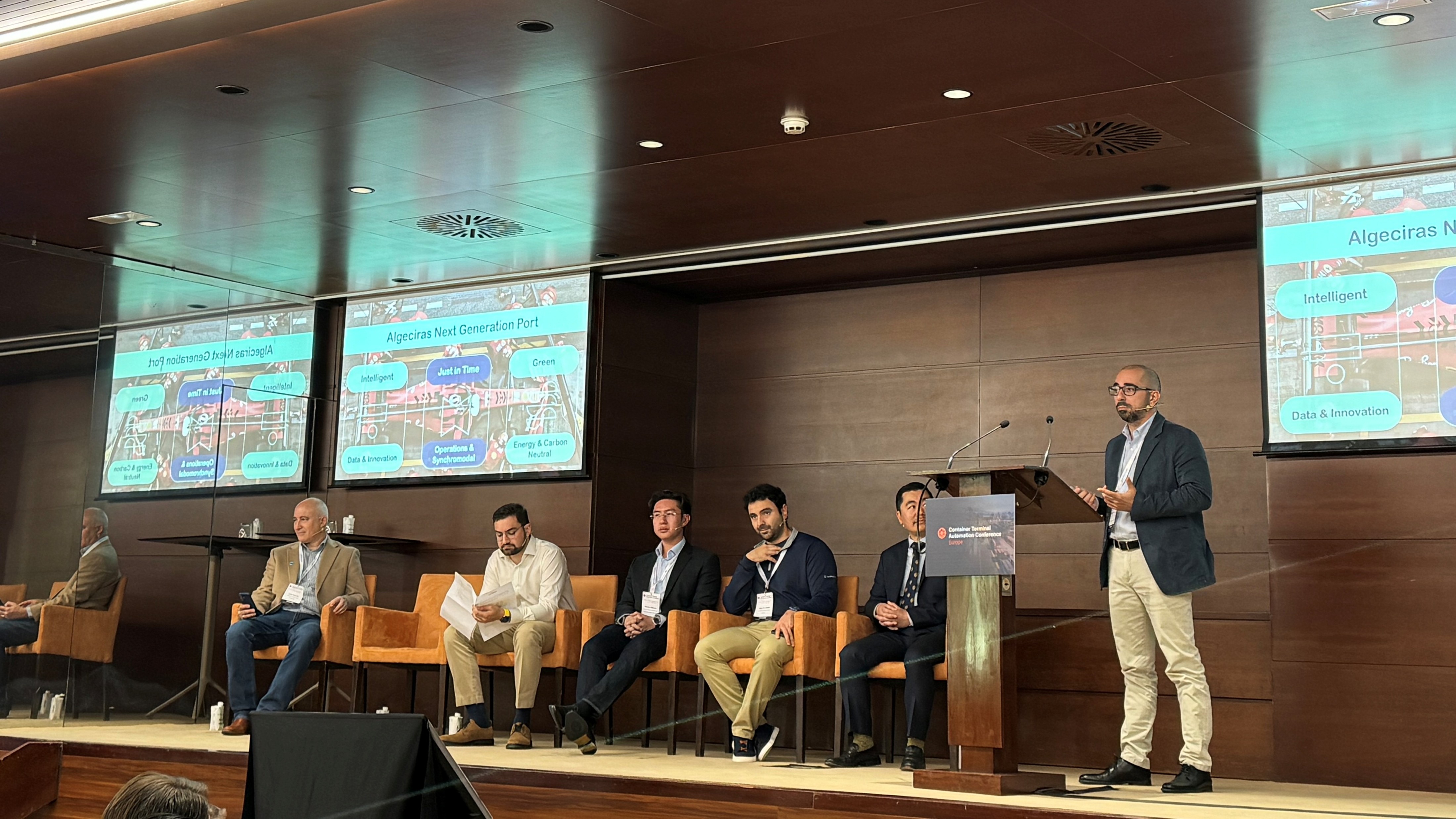
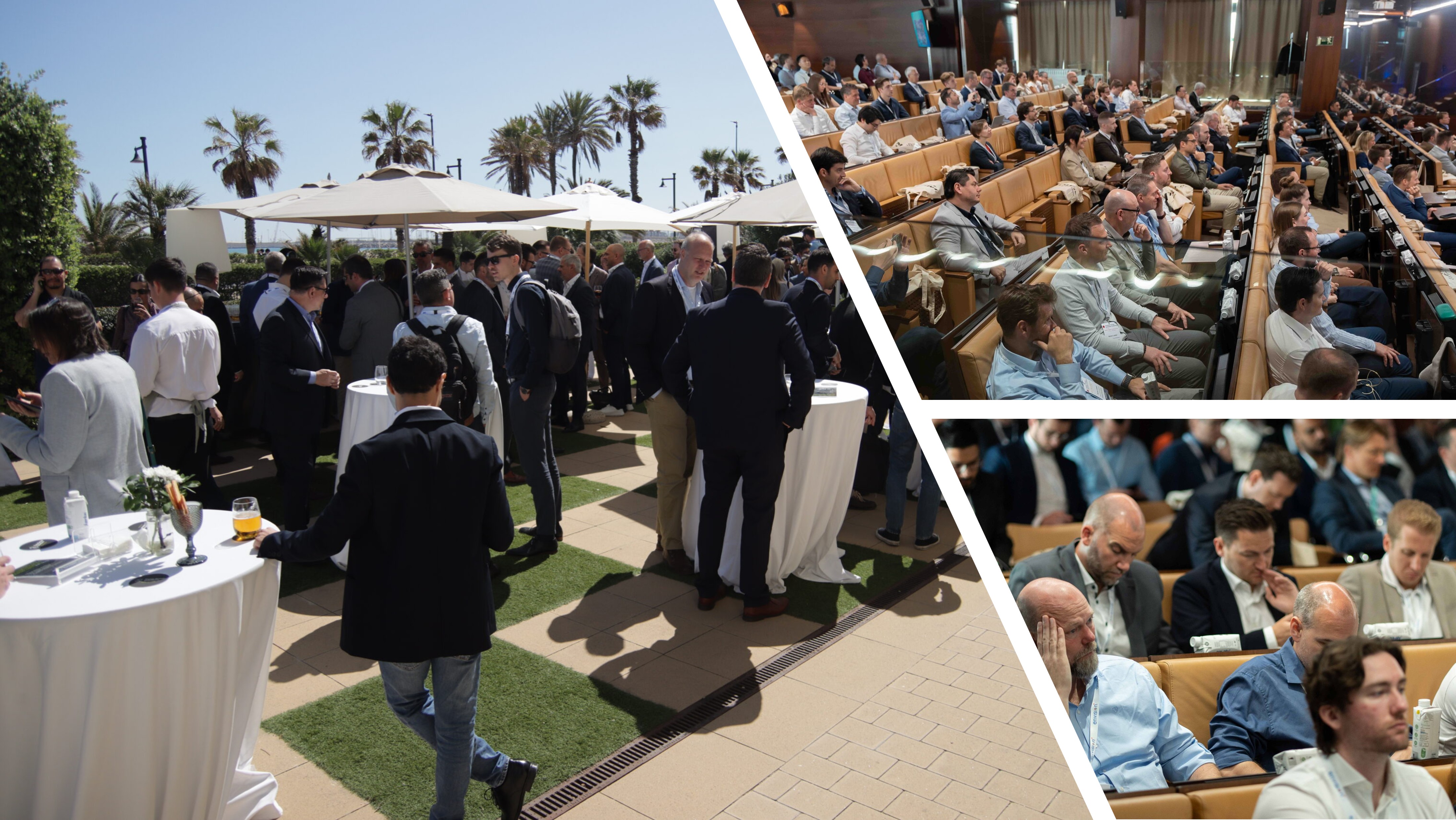
The Port Authority of the Bay of Algeciras (APBA) took part in the tenth edition of the Container Terminal Automation Conference Europe (CTAC), organised by Port Technology International and held on 21 and 22 April at the Hotel Las Arenas Balneario Resort in Valencia.
The event brought together representatives from leading European container terminal operators, port authorities, and technology and automation providers from the maritime-port sector. Over the two-day conference, a series of roundtables and panel discussions addressed key topics such as the state of the art in terminal modernisation in an environment of increasing volatility and the race for resilience, technology adoption aimed at operational improvement, the intelligent use of data, and how to digitally align the quay and landside access to improve predictability and coordination of logistics flows, among others.
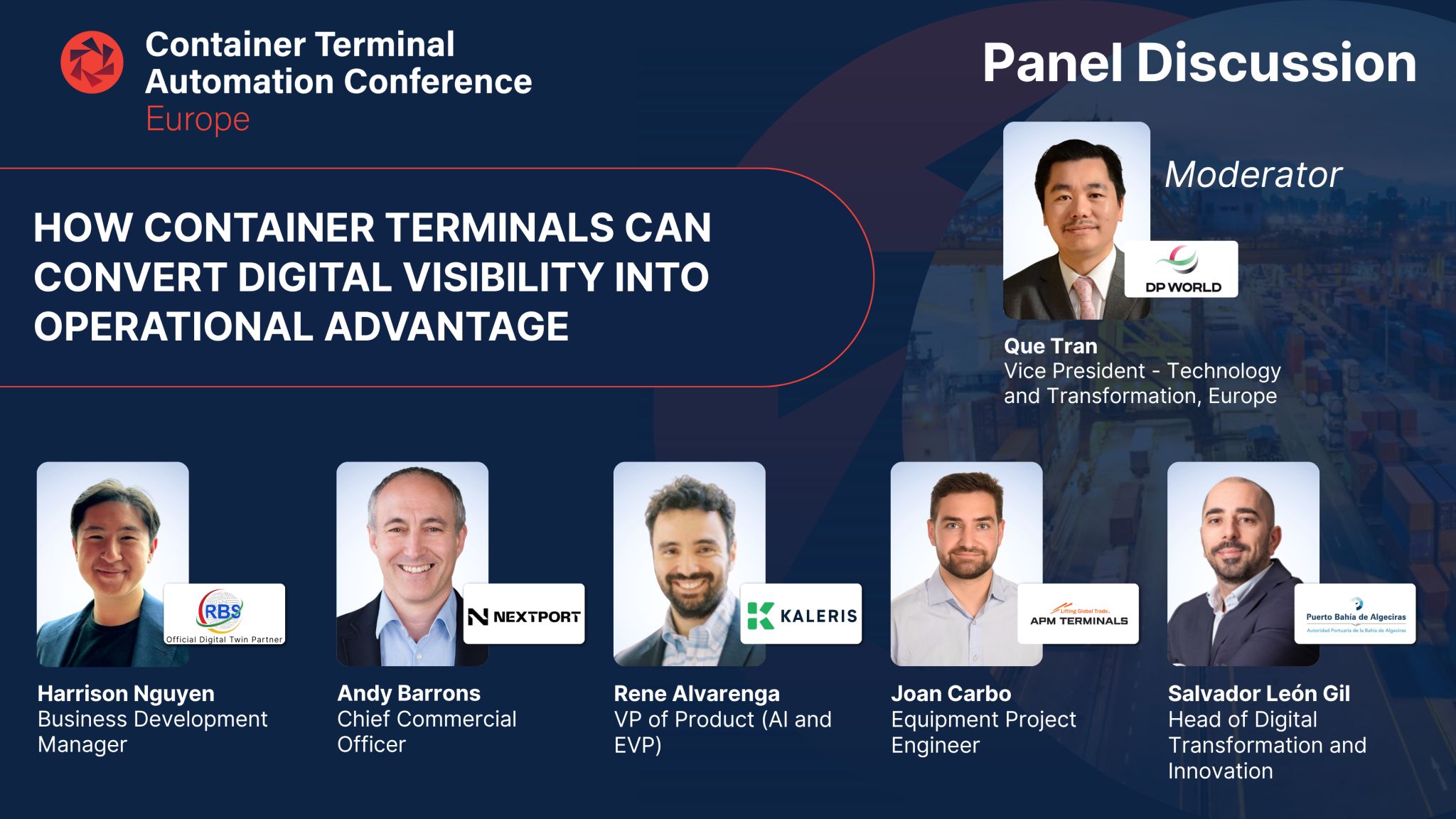
Representing APBA, Salvador León, Head of the Digital Transformation and Innovation Division, participated in the panel entitled “How Container Terminals Can Convert Digital Visibility into Operational Advantage”, held on Wednesday 22 April. Moderated by Que Tran, Vice President of Technology & Transformation at DP World, the panel brought together international experts such as Harrison Nguyen, Business Development Manager at Realtime Business Solutions; Rene Alvarenga, Vice President of Product at Kaleris; Andy Barrons, Chief Commercial Officer at NextPort; and Joan Carbó, Equipment Project Engineer at APM Terminals Valencia.
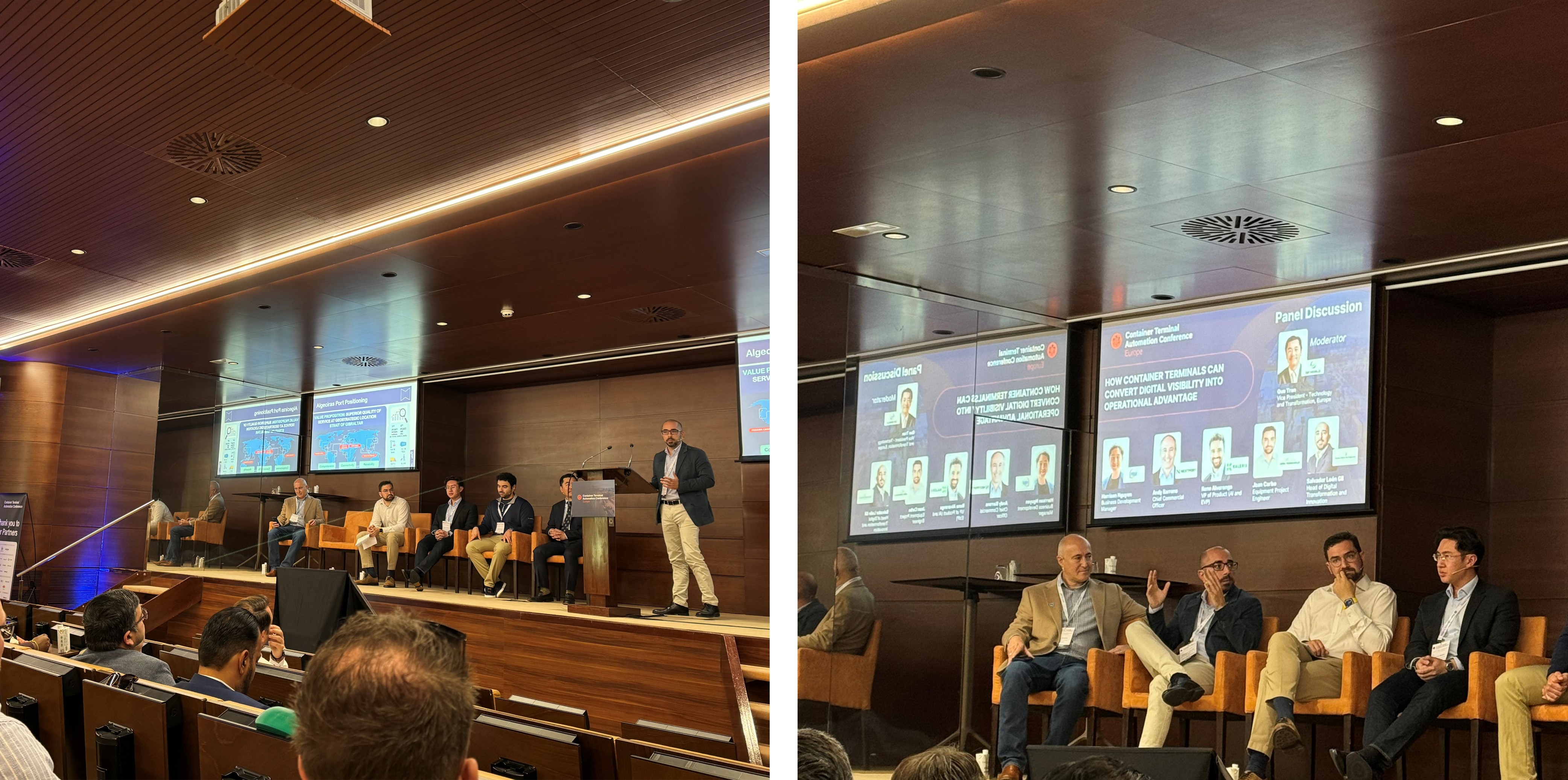
Salvador León’s contribution focused on explaining how the Port of Algeciras is leading the integration of technologies and the adoption of a data-driven approach across its logistics-port ecosystem, with the aim of developing the concept of a “Next Generation Port of Algeciras” and delivering a differentiated value proposition in its competitive environment. He also highlighted APBA’s digital ambition, based on the deployment of a Digital Platform for Orchestrating the Port-Logistics Ecosystem: a “platform of platforms” designed to coordinate logistics and port operations across the entire multimodal node of the Port of Algeciras in an optimal, holistic and synchronous manner, and how this roadmap is already generating a tangible impact in the port.
A clear example of this is the Port Collaborative Decision-Making (PortCDM) tool, which is delivering tangible benefits in support of operational excellence by reducing vessel port call idle times, while simultaneously contributing to the decarbonisation of the industry through lower emissions. All of this is underpinned by a shift in mindset focused on collaboration, real-time and predictive information sharing, and the promotion of Just‑in‑Time port calls. As León himself noted, “examples like this have been decisive in highlighting the Port of Algeciras’ role as an operational orchestrator, supporting its designation as one of the seven global hubs of the Gemini alliance (Maersk – Hapag‑Lloyd) within a new and highly demanding service structure.”
During the session, the importance of building a shared understanding around the use of data as a true lever for operational efficiency was highlighted, beyond short-term, isolated benefits. It was emphasised that visibility only creates value when it is directed towards improving decision-making by people and teams. Finally, participants agreed that, despite having more data available than ever before, decision-making processes are often slower, reinforcing the need to close the execution gap through validated, continuous and reliable data flows that facilitate user adoption.
In this edition, the key topics of interest identified for the event included the use of simulation and digital twins as decision-support tools, the development of a standardised data infrastructure to enable automation and artificial intelligence, and the need for improved coordination between cranes, automated equipment and terminal operating systems as a critical factor in sustaining long-term operational efficiency and reliability.


Leave a Reply