
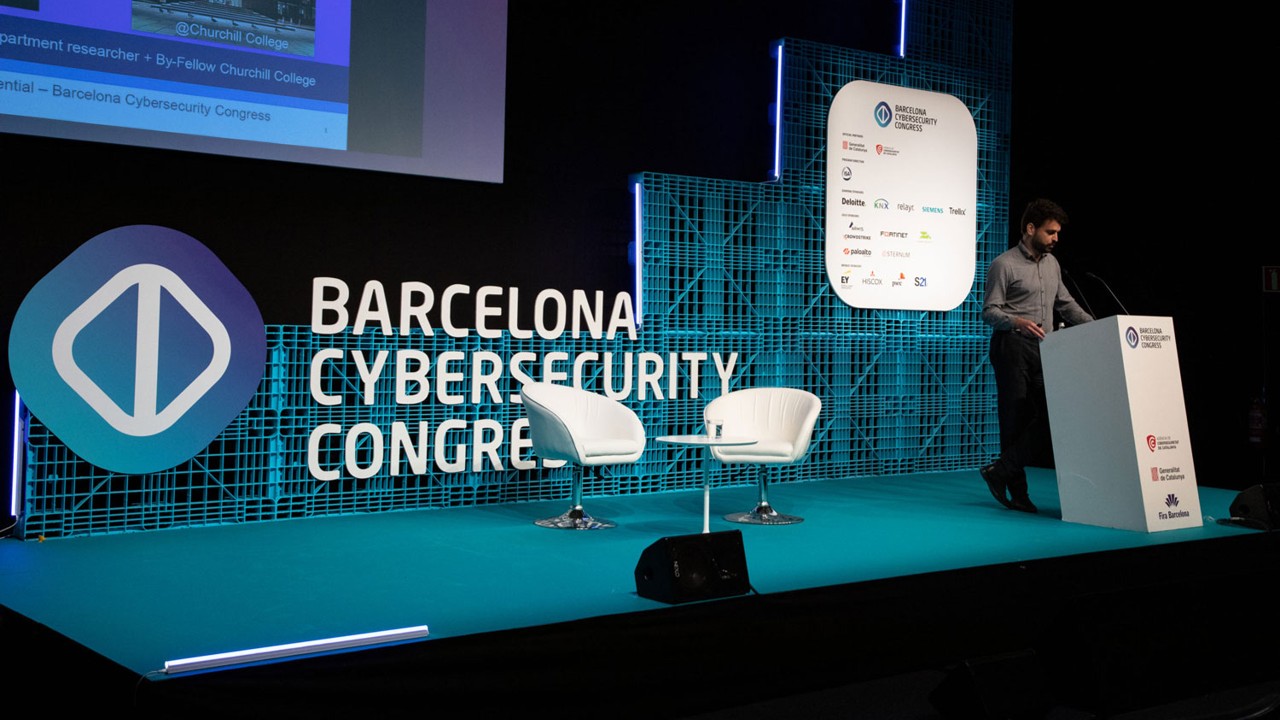
The Algeciras Bay Port Authority (APBA) took part on 4 November in the Barcelona Smart Transportation & Maritime Cyber Resilience Forum. The forum was held as part of the Barcelona Cybersecurity Congress (BCC26), one of Europe’s leading cybersecurity events, which took place from 3 to 5 November at the Fira de Barcelona Gran Via venue. The forum brought together representatives from the transport, port, maritime and cybersecurity sectors.
Together, they examined emerging threats, the convergence of IT and OT environments, operational continuity, regulatory requirements and supply chain dependencies. The aim was to identify practical priorities for protecting essential services and strengthening cross-sector collaboration. The event was organised by LSEC – Leaders in Security, with the support of the European ACTI-X initiative.
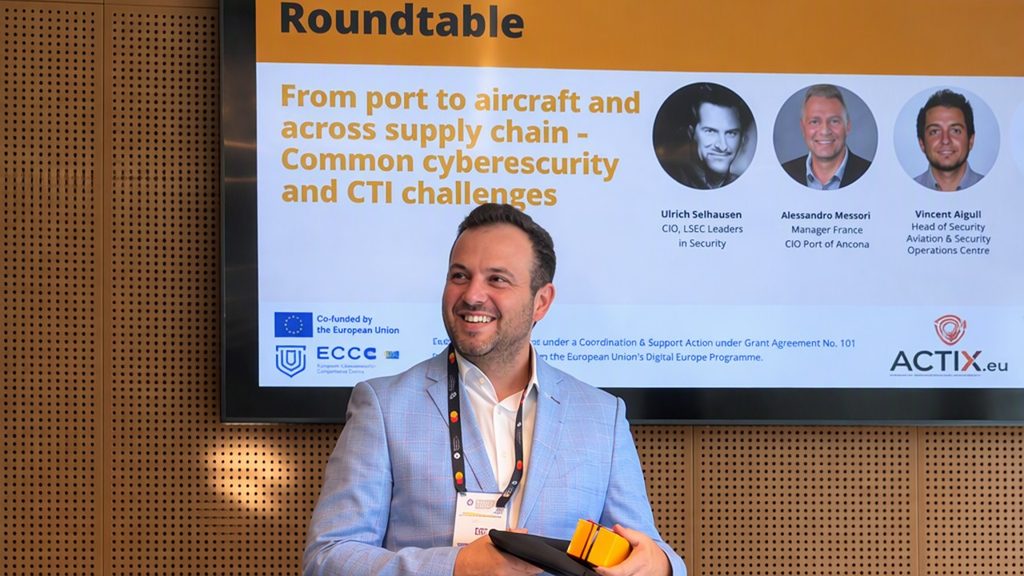
The Port of Algeciras took part in the panel discussion entitled «From port to aircraft and across supply chain – Common cybersecurity and CTI challenges». The session was moderated by Ulrich Seldeslachts, CEO of LSEC – Leaders in Security, and featured Alejandro Manuel Herrera Pérez, CISO of APBA’s Technology Development Department (ADT); Nick Saharan, President of CSAFI.ORG; and Vincent Rigal, Head of Application Security Operations Centres at Amadeus. Together, they represented different links in the global supply chain.
During his remarks, Herrera explained that the Port of Algeciras’ transition towards becoming an orchestrator of a smart, interconnected port ecosystem also increases cybersecurity challenges, particularly because not all members of the Port Community have the same level of maturity. He also highlighted that one of the key elements of APBA’s protection strategy is the continuous review of its exposure surface, combined with collaboration with other organisations and entities in incident detection and response, as well as in identifying the strengths and weaknesses of the logistics-port ecosystem itself. This collaboration with operators, shipping companies, logistics companies and public authorities, including law enforcement agencies, is essential for detecting and responding to incidents and for sharing cyber situational awareness across the ecosystem, moving from protecting individual organisations towards building the collective cyber resilience of the entire Port Community.

The discussion addressed the cybersecurity challenges facing global supply chains, their sensitivity to disruption and their exposure to OT risks. The impact of hybrid threats on the operation of infrastructures such as ports was also discussed, where the consequences of attacks can trigger events of different kinds that may significantly affect maritime traffic, waiting times, and the boarding and disembarkation of goods and passengers, among other operations. Another key topic was the dual role of Artificial Intelligence (AI), which accelerates attacks but also strengthens defence capabilities, requiring equally rapid responses and a balance between risks and benefits. Finally, the discussion highlighted shortcomings in the resilience of critical infrastructure to maintain operations during crisis situations, as well as initiatives aimed at improving the response to major incidents affecting essential services.
During the rest of the day’s programme, experts highlighted the sustained increase in cyberattacks and security alerts, as well as the obligation for entities classified as important or essential under the NIS2 Directive to report incidents, pending the forthcoming transposition of the Directive. Discussions also covered the need for coordination between European and regional institutions to anticipate threats, the protection of public administrations against incidents, and how to share threat intelligence through AI-based platforms funded by European programmes, so that an attack detected by one organisation can help others strengthen their detection and response capabilities.
In its seventh edition, the Barcelona Cybersecurity Congress brought together 112 exhibiting companies, more than 150 international experts and over 6,900 visitors. Companies including EY, Fortinet, Cisco, SoSafe, Mastercard, Sophos, ClearSkies, Sirt, TrendAI, ThreatLocker and Telefónica presented solutions designed to anticipate, detect and respond to increasingly sophisticated cyberattacks.


Leave a Reply