
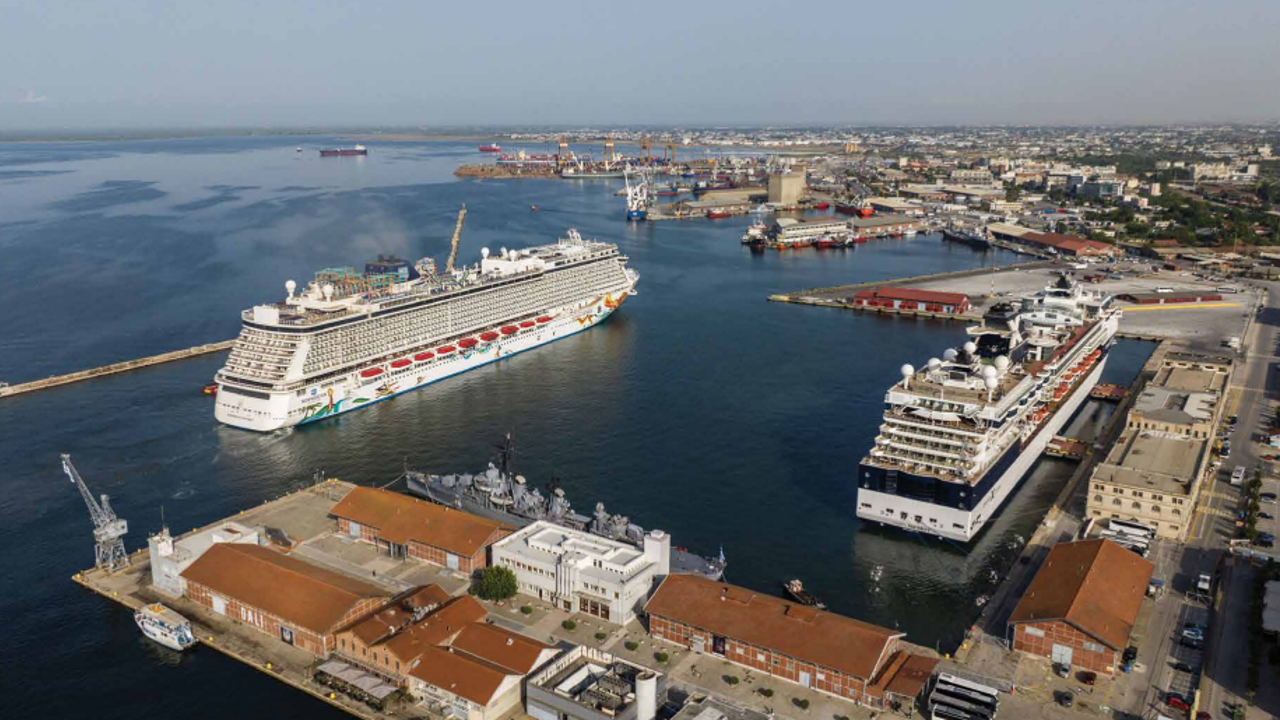
In the global economy, where more than 80% of trade is transported by sea, digital transformation in ports and logistics nodes has become a strategic necessity. Christos K. Papadopoulos, Head of the Information Technology and Telecommunications Department at the Port of Thessaloniki, describes this process as a Chessboard in which two forces compete: the Daemons, which represent obstacles—legacy systems, fragmented data, cyber threats and cultural resistance—and the Gods, which symbolise the objectives: operational efficiency, sustainability, security and competitive growth.
The Daemons are challenges that impede progress: obsolete infrastructures, poor data quality, vulnerabilities to cyber attacks and complex regulatory requirements. To this is added cultural resistance, which transforms digitalisation into a human challenge as much as a technological one. Ignoring these factors can result in economic losses, operational disruptions and loss of confidence in the logistics chain.
On the other hand, the Gods are the goals that drive transformation: cost optimisation, data-driven decision-making, integrated experiences for logistics actors, sustainability and security. Digital solutions enable monitoring of emissions, process automation and strengthening of operational resilience, aligning efficiency with growing environmental and regulatory demands.
Papadopoulos proposes five strategic moves to advance across this board: i) map priority challenges, ii) invest in digital capabilities and training, iii) deploy technology with a clear strategy, iv) foster a culture that embraces change, and v) maintain continuous adaptation. Digital transformation is not a one-off effort, but an ongoing challenge where anticipating moves makes the difference.
“Digital transformation is not merely a technological update, it is a strategic game where the only path to achieving operational efficiency and global competitiveness consists of neutralising legacy systems and information silos.”
The main inputs and contributions are:
- Digital transformation is configured as a strategic chessboard where operational barriers (Daemons) compete against business objectives (Gods), demanding tactical management of this duality to achieve success beyond mere technical implementation.
- Legacy systems constitute the primary structural obstacle to innovation, often operating in fragmented silos that prevent real interoperability and block organisations’ capacity to scale new technological solutions.
- The digitalisation of logistics nodes has ceased to be an option to become an indispensable requirement for survival in managing operational and regulatory complexity, especially in a sector that moves 80% of global trade.
- The persistence of old technological infrastructures drastically reduces cross-chain visibility of the supply chain, limiting the capacity to respond to disruptions and reducing efficiency in data-driven decision-making.
- Technology must be strictly subordinated to concrete strategic objectives (Gods) such as operational efficiency, cost reduction and regulatory compliance, discarding any innovation that does not deliver measurable and direct business value.
- The scalability of modern solutions is unfeasible without first addressing the obsolescence of base infrastructure, as the technical incompatibility of old systems acts as a constant brake on any attempt at sustainable modernisation.
- The port must evolve towards an intelligent and integrated logistics ecosystem, acting as a digital orchestrator that connects all actors in the chain fluidly, transcending its traditional role as a mere physical handler of goods.
- An organisation’s technological capacity directly determines its ability to comply with increasingly strict international regulations, converting digital adaptation into a fundamental tool for maintaining competitiveness and licence to operate.
“Success depends on the ability to map the chessboard, deploy technology strategically, develop human and digital capabilities, and cultivate a culture of continuous improvement.”


Leave a Reply