
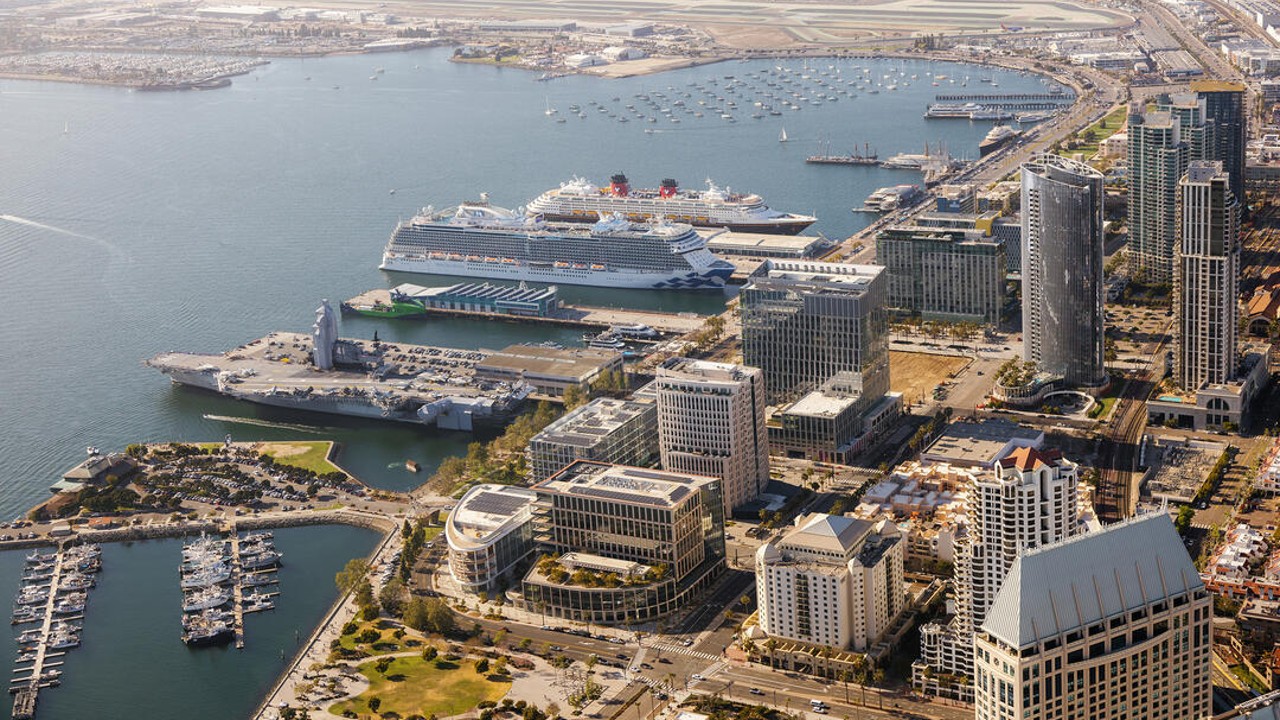
The report presents the evolution and outcomes of the Blue Economy Incubator (BEI), an initiative led by the Port of San Diego to accelerate the development and adoption of innovative solutions within the blue economy. The program serves as a support mechanism for startups, technology companies, research institutions, and entrepreneurs developing technologies with the potential to enhance sustainability, coastal resilience, and the competitiveness of maritime activities.
Since its launch, the incubator has provided a platform for validating emerging technologies in real-world environments, offering access to infrastructure, funding opportunities, mentoring, and collaboration networks. The report highlights how this model has enabled innovative ideas to evolve into pilot projects with practical applications in areas such as environmental monitoring, marine ecosystem restoration, decarbonization, ocean intelligence, and sustainable resource management.
One of the program’s most distinctive features is its ability to combine economic and environmental objectives, demonstrating that innovation can simultaneously drive economic growth, protect the marine environment, and create highly skilled jobs. The Port of San Diego acts not only as an infrastructure manager but also as an innovation catalyst and facilitator of the broader blue economy ecosystem.
The document underscores the growing role of ports as platforms for experimentation and collaboration, capable of bringing together public authorities, startups, universities, investors, and end users to accelerate the transition towards more sustainable and resilient maritime models.
“The Blue Economy Incubator supports innovative companies developing technologies and services that promote the sustainable use of ocean and coastal resources.”
The main inputs and contributions are:
- With $3.3 million invested across 14 pilot projects, participating companies have attracted an additional $9.1 million in external funding, representing nearly three dollars of private investment for every public dollar invested. The program has also generated more than 40 partnerships. Each pilot is assessed against its own KPIs, while the overall program is monitored through aggregated indicators, enabling an objective evaluation of impact and supporting its long-term continuity.
- The BEI focuses on six innovation opportunity areas: nature-based solutions, coastal resilience and monitoring, shellfish and seaweed aquaculture, environmental protection and remediation, maritime decarbonization, and ocean intelligence. As a result, pilots are directly aligned with real port challenges, including the Maritime Clean Air Strategy (MCAS) and the vessel speed reduction program.
- The innovation process follows a four-stage evaluation pathway. It begins with the submission of a pitch deck and an initial screening of the proposal. Selected opportunities are then assessed in detail by a committee comprising management and subject-matter experts, who review the business model, financial viability, and operational feasibility. Projects subsequently undergo executive review by the CEO before receiving final approval and funding authorization from the Port Board of Commissioners.
- The BEI’s distinctive value proposition lies in enabling pilot deployments. In addition to funding, it provides testing environments within the port, support with permitting, access to expert knowledge, media visibility, and assistance in securing grants. In return, the port may receive royalties or a share of revenues. For example, its agreement with PortXchange includes a revenue-sharing mechanism valued at up to $1.8 million.
- Specifically, the COASTALOCK project (ECOncrete) has developed a coastal protection solution that replaces conventional rock armoring. The system has demonstrated structural durability while providing habitat for more than 60 marine species. Based on these results, the port plans to deploy approximately 320 additional meters across two locations within the bay.
- Meanwhile, the HyperKelp project will deploy smart buoys capable of measuring underwater noise, CO₂ levels, and water quality. MarineLabs complements this approach by monitoring surface wave conditions, wind, and vessel wake to support coastal resilience initiatives. Together, these technologies provide a comprehensive view of the bay, both above and below the water surface.
- The BEI also collaborates with PortXchange through its EmissionInsider solution, which collects real-time emissions data from vessels, trucks, and rail operations in support of the MCAS.
- The incubator includes a dedicated workstream focused on enhancing the sustainability of marine ecosystems. Notable initiatives include a floating shellfish nursery developed by San Diego Bay Aquaculture to address seed shortages, native seaweed cultivation projects led by Sunken Seaweed to evaluate carbon capture potential and water-quality benefits, and Lux Bio’s biodegradable bioluminescent alternative to chemical glow sticks used in commercial fisheries, validated in collaboration with industry and government partners.
- In terms of international partnerships, the port became the first port in the United States and the Pacific region to join the Port Innovators Network. Its collaboration with COAST, the Canadian blue economy hub, has brought five Canadian companies into the BEI portfolio. The incubator is also a key partner of StartBlue, UC San Diego’s ocean-focused accelerator.
- The BEI demonstrates how a Port Authority can evolve from managing infrastructure to catalyzing entrepreneurial ecosystems, generating environmental, economic, and strategic positioning benefits. The port itself describes the initiative as the world’s only incubator led by a port authority
“Innovation, sustainability, and economic growth are not competing priorities; they are mutually reinforcing outcomes that, when pursued together, create lasting value.”


Leave a Reply